श्रीगणेशाय नमः।
सुश्रुतसंहिता हिन्दीव्याख्या - कविराज अम्बिकादत्त शास्त्री — पृष्ठ 1–10
सुश्रुतसंहिता हिन्दीव्याख्या - कविराज अम्बिकादत्त शास्त्री · चौखम्बा संस्कृत सीरिज, बनारस · पृष्ठ 1–10
पृष्ठ 1

पाठ पढ़ें पाठ छिपाएँ
इस पृष्ठ पर कोई पाठ नहीं मिला — ऊपर मूल चित्र देखें।
पृष्ठ 2
पाठ पढ़ें पाठ छिपाएँ
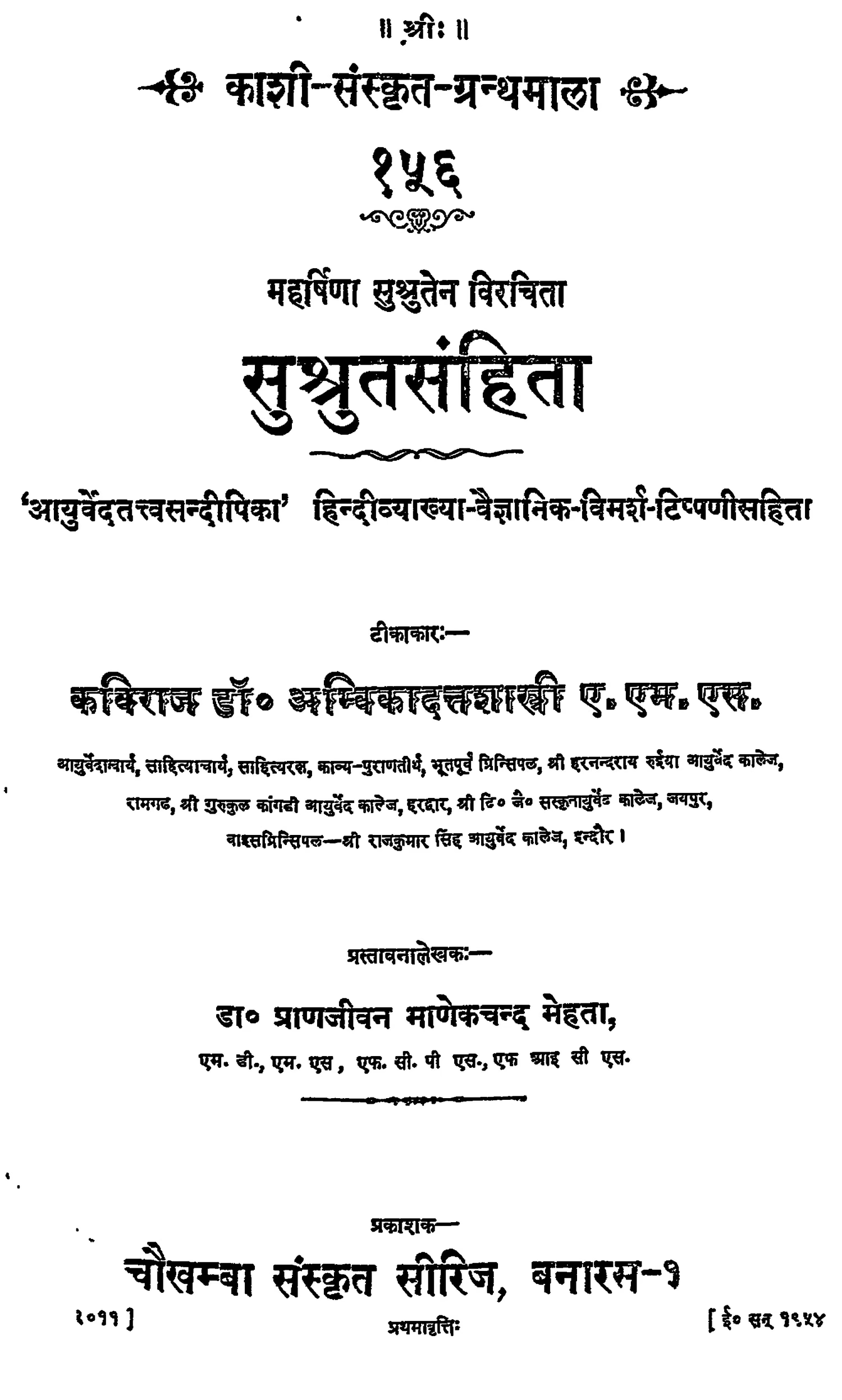
॥ श्रीः ॥ - काशी - संस्कृत ग्रन्थमाला ---१५६ महर्षिणा सुश्रुतेन विरचिता सुश्रुतसंहिता ' आयुर्वेदतत्वसन्दीपिका ' हिन्दीव्याख्या - वैज्ञानिक - विमर्श - टिप्पणीसहिता टीकाकार: -कविराज डॉ ० अम्बिकादत्तशास्त्री ए. एम. एफ. आयुर्वेदात्वार्य, साहित्याचार्यं, साहित्यरस, काव्य - पुराणतीर्थं, भूतपूर्वं प्रिन्सिपल, श्री हरनन्दराय रुईया आयुर्वेद कालेज, रामगढ, श्री गुरुकुल कांगडी आयुर्वेद कालेज,, हरद्वार, श्री दि ० जे ० सस्कृतायुर्वेद कालेज, जयपुर, वाइसप्रिन्सिपल - श्री राजकुमार सिंह आयुर्वेद कालेज, इन्दौर । प्रस्तावनालेखकः-डा ० प्राणजीवन माणेकचन्द मेहता, एम. डी., एम. एस,, एफ. सी. पी एस., एफ आइ सी एस. प्रकाशक-चौखम्बा संस्कृत सीरिज, बनारस - १ १०११ ] प्रथमावृत्तिः [ ई ० सन् १ ९ ५४
पृष्ठ 3
पाठ पढ़ें पाठ छिपाएँ
प्रकाशकः--जयकृष्णदास हरिदास गुप्तः, चौखम्बा - संस्कृत- सीरिज आफिस, पो ० नाक्स नं ० ८, बनारस - १ ( पुनर्मुद्रणादिकाः सर्वेऽधिकारा. प्रकाशकाघीनाः ) The Chowkhamba Sanskrit Series Office. P. O. Box 8, Banaras. 1954 मुद्रक: --विद्याविलास प्रेस बनारस - १ !
पृष्ठ 4
पाठ पढ़ें पाठ छिपाएँ
Foreword I am happy to write these few words by way of introduction to and appreciation of Kaviraj Ambikaduttaji's book entitled Sugruta Samhita ( -azgeicifqmoureur - uygfear ) SuIruta Samhita is one of the two most ancient, encyclopedic and authoritative classical books of Indian Medicine It is one of the few books that have lived a life of about two milleniums. Its survival for such a long period becomes quite conspicuously surprising when our day to day experience is that in our modern library of hundreds of thousands of volumes, a book is hardly extant for a period of even half a century The comparative longevity of such books can be explained if we refer to OSLER's classification of authors He groups them in three classes - creator, transmuter and transmitter The fist is the instinctive, inspired, original and intellectual type He is rare, his work remains long - lived rather eternal and fountain - head of future generation He may be one in a million The second is of the similar type but somewhat less in original all - comprehensive concept but more practical and more worldly. He makes the knowledge of the first type more intelligible, practical and useful Such persons are created in every new age or rather they may be the creators of new age They are respected more or less equally as the first type and are placed nearly in the same category as the first The third type is mere copyist They seive the purpose of keeping the torch of knowledge burning SuIruta Samhita is the creation of the sage surgeon of the first type Somebody may raise the question that there may be some older text - book other than Sugruta Samhita, and it must be given the place of veneration The reply will rationalize our justification in bestowing the prime place to SuIruta Samhita in Surgery There may be scattered surgical knowledge, experience and practice pieceding the age of compilation of Susruta Samhita but to systematise and put it on a scientific level so that generalization and progress may be possible, needed the learning and experience of a creative personality of the author of Sugruta Samhita It is not the chronological priority that is respected but it is the scientific superiority that is highly valued VägbhaIa the author of the second type who flourished in the fourth century also states the same. ऋषिप्रणीते प्रीतिश्चेन्मुक्त्वा चरकसुश्रुतौ । भेडाद्याः किं न पठ्यन्ते तस्माद् ग्राह्यं सुभाषितम् ॥ ' If the works of the ancient Hisis alone are worthy of interest, why are Bhela and such otheis not studied, leaving off Charaka and SuIruta? Therefore it is right that a good work should always be accepted. '
पृष्ठ 5
पाठ पढ़ें पाठ छिपाएँ
1 2 1 The SuIruta Samhita being of a superb type of work, the previous books fell into oblivion, and all the later treatises drew inspiration and guidance in theoretical concepts and practical work from it It will be too presumptive to write a review for such a book, even a transmuter can write only explanatory commentary or quote wholesale excerpts from here and there It is not possible for a common man like me to fathom the depths of such a meaningful and purposeful book I can do best to join hands with the scholars of the past and present age who have looked at it with all admiration and as guiding star and spirit, in the progress of science for the benefit of the humanity. 1 1 The present commentator is a person of wide experience and erudition. As a result of indefatiguable industry and diligence he has been able to compile and publish a number of books on various bianches of Ayurveda In this compilation he has taken great pains to collect the various scholarly commentaries and tried to compare and contrast them with one clear purpose that is to elucidate the real meaning and best interpretation of the text. Charaka lays equal stress on interpretation as on the study of the text alone. auftarìsfa mento azayezur fanI fIr995 | alfonzefa qaraingia, muaqà var 11 ' A physician who is not conversant with the canons of exposition, though he may be a student of many treatises, will fail to grasp the meaning of these treatises, just as a man fails to acque wealth when fortune has deserted him ' Here too I find myself not competent enough to give full justice to the labour of the learned author. A number of commentators in different periods of the last fifteen hundred years have commented on it according to their predilection It has been translated in various languages of the East and West The question now arises as to what is the use of adding one more translation and commentary to already extant and available scores of such compilations The need and justification of such a new publication will be easily understood and realized if we study the present circumstances of establishment of Renaissance of, Ayurveda THE PRESENT AGE IS THE PERIOD OF RENAISSANCE AND RE - EMERGENCE OF AYURVEDA. In the end of the last century India awoke from her long slumber. She awoke to the realization of the value of her heritage in art, literature and study of Sanskrit by Western Savants, by the Philosophy. The Royal Asiatic Society and other
पृष्ठ 6
पाठ पढ़ें पाठ छिपाएँ
bodies of men of learning and enlightenment was in a great measure responsible for this renaissance As a result of the impact between her age - old culture and the new forces of modern thought from the West, India became conscious of her mission and special contribution to the world in the matter of thought, way of life and spiritual ideals The inadequacies of modern scientific mode of life and thought became gradually evident and the people of the west themselves realized that mere scientific achievement was going to lead mankind nowhere The literature and philosophy of ancient India is full of imspiration for moral and spiritual upliftment of man The emphasis is all on the psychic and spiritual aspects, the unseen in man As medicine is an integral part of the sacred literature of the Vedas, the scholars ' and researchers ' eye fell on that and one after another of these scholars beginning with Max Muller right up to Sylvain Levi and Dr. Filliozat of the West and our own learned Pandits, Vaidyas and Historians of philosophy like Dr. Radhakrishnan and Dasgupta discovered the unique achievement of India in Medical thought and practice. Indian Medicine has since been the subject of study of many orientalists like Zimmer, Julius Jolly, Sigerist and other famous savants As a part of the new national awakening which demanded political emancipation there arose also the desire for resuscitating the age - old system of Medicine and for adjusting it to the new conditions Consequently year after year conferences were held for the upliftment of Ayurveda and the persistent demand for such a revival persuaded even the British Government to open schools of medicine and give some degree of encouragement to Indian Medicine With the achievement of Independence, the people of India desired more than ever to revive the age - old system of Ayurveda and by methods of modern research to interpret it in terms intelligible to the modern world and wherever necessary import new trends into Ayurvedic treatment and drugs without endangering its basic structure and pattern. As a consequence of this the various states instituted courses of study embodying the whole Ayurveda and the basic knowledge of Modern Medicine The Renaissance is still taking shape and it is hoped it will emerge fully in the form of a synthetic or integrated system of Universal Medicine wherein the contribution of Ayurveda will be fully embodied for the World's benefit PARALLELISM OF THE RENAISSANCE OF AYURVEDA WITH THAT OF MODERN SCIENCE The period through which India is passing at present may well be compared with the beginning of the Scientific Age of Europe. There runs a great parallelism between the development of Ayurveda and that of western medical science. In 460 B. C, Hippocrates of Cos, who is called the father of the modern medicine, collected the medical knowledge of his times and codified it in the scientific methods, just as
पृष्ठ 7
पाठ पढ़ें पाठ छिपाएँ
[ 4 ] Charaka did in India. Later during the Roman ascendancy, Galen of Pergamon wrote in 131 A D another classic just as Sugruta did here There is a similarity in the style of both Detailed description based on experimental work or on personal observation, characterizes the writings of both of them In the fourth century Obasius of Pergamon ( 325 A D ) wrote books presenting Hippocrates and Galen in popular forms just as Vägbhata did in the case of Chalaka and Sugiuta in India After the seventh century, western civilization suffered a set - back and there I was a general decline in art and science In India, this stage of things was to come some six or seven centuries later The renaissance on the so called scientific age in Europe began with the period between the fourteenth and sixteenth centuries It was the levival of arts and letters under the influence of classical methods in the countries of its progress The European lenaissance gave the western world the modern scientific spirit This scientific spirit which is the basic principle of the present civilization is the influence of the great movement of the renaissance. THE REVIVAL OF LEARNING This great movement known as the Renaissance or Revival of Learning can be considered here only as legaids its influence on medicine It influenced medical science in many ways fiist by the levival of the Greek medical classics in the original, which, though these writers had been imperfectly and in very inaccurate versions known before, was found to breathe a new spirit into medical learning, next by the invention of printing, which came at the right time to permit the works rediscovered by scholars to be widely distributed, and above all by the renewal of intellectual activity, the bold challenging of authority and the spuit of inquiry and research, which were the distinguishing marks of the New Learning Moreover, the new scientific methods found new objects to work upon, which the old systems were incompetent to explain The first step taken was the revival of the Greek medical classics The Greek manuscripts were collected from all over the countries of Europe, Africa and Asia and were translated in Latin The pioneers in these efforts were scholais, physicians and publishers Works of Hippociates, Galen, Dioscorides, Celsus and other medical classics were turned into Latin and often they were printed with original Greek texts The great enthusiasm prevailed at that period for such work, and it is recorded that the printing presses of Europe, in the fifteenth century issued about forty thousand incunabula Each edition averaged about five hundi ed copies and thus twenty millions of books were printed in all. It was a Grecian Century Greek medical literature 1evived and expanded in a more spacious lealm than she had ever known.
पृष्ठ 8
पाठ पढ़ें पाठ छिपाएँ
[ 5 ] The publisher Aldus Manutius has played an important role in this work of Renaissance. His motto was ' never to allow scholars to want for good books of literature and science '. He carried his enterprise unobstructed by poverty or political interferences. His was the house where scholars and savants and physicians crowded for help, co operation and guidance. He died poor but he rendered the yeoman service by rescuing the priceless works on arts and sciences of ancient Greeks and so his name will ever be remembered by future generations Thus what has been achieved as a result of renaissance in Europe and the means by which it was fulfilled, can well serve us as guidance and an example for the advancement of our knowledge, culture and learning. It is with this thing in view that our oldest and authoritative classics of medicine - Caraka and SuIruta, need hundreds of editions together with their M translations and commentaries By doing this, in the first place the faults and defects in the original texts will be corrected and removed Our scriptures and treatises of science, coming as they are from manuscripts, bear many mistakes and changes of form in the process of writing from one scribe to another Alberuni the great muslim scholar of the 11th century says in this connection. " Besides the faults of the translators a considerable corruption of the text by the negligence of the copyists more particularly as regards the proper name is found. The Indian scribes are careless, and do not take pains to produce correct and well - collated copies in consequence, the highest results of the author's mental development are lost by their negligence and his book becomes already in the first or second copy so full of faults, that the text appears as something entirely I new which neither a scholar nor one familiar with the subject, whether Hindu or Muslim could any longer understand. It will sufficiently illustrate the matter if we tell the reader that we have sometimes written down a word from the mouth of Hindus, taking the greatest pains to fix its pronunciation and that afterwards when we repeated it to them, they had great difficulty in recognising it " Moreover, each commentary may throw some light on many significant and potent descriptions which need more extensive and lucid interpretations to be clearly understood in this age. So the aim of each commentator is to simplify and reveal the latent significance of the text. Now SuIruta Samhita is a treatise of universal importance It is one of the Vedas of the Science of Medicine in India and so various commentators from various countries have written commentaries on it according to each one's predilection There are translations of SuIruta in various languages both of the East and the West. Yet it is not only desirable but essential to have as many
पृष्ठ 9
पाठ पढ़ें पाठ छिपाएँ
[ 6 ] translations and commentaries as possible for the enlightenment and elucidation of the classical work on surgery like Sugruta Samhita It is with this view that I welcome this present publication which has been brought out by the painstaking Kaviraj Ambikaduttaji who has tried his best to make the work intelligible and simple I congratulate the author for the onerous task that he has fulfilled so energetically and patiently. The publishers also deserve praise and compliment for their helpful attitude, encouragement and support in this publication I express my indebtedness and cordial thanks both to the author and the publisher who so affectionately invited me to accept the honour of writing this foreword JAMNAGAR Dt 7-3-1953 } I I. IIIII
पृष्ठ 10
पाठ पढ़ें पाठ छिपाएँ
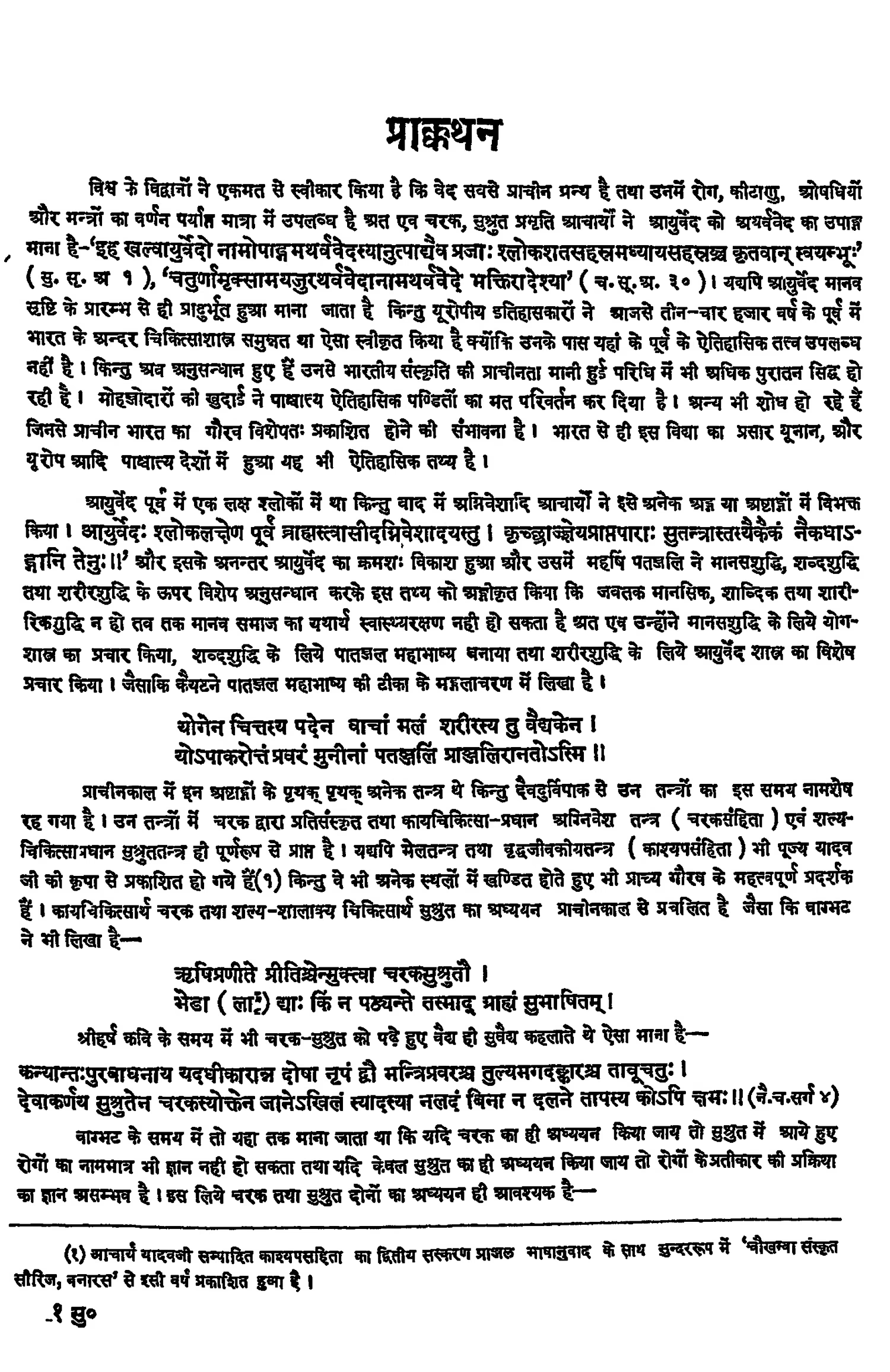
प्राक्कथन विश्व के विद्वानों ने एकमत से स्वीकार किया है कि वेद सबसे प्राचीन ग्रन्थ है तथा उनमें रोग, कीटाणु, श्रोषधियों और मन्त्रों का वर्णन पर्याप्त मात्रा में उपलब्ध है अत एव चरक, सुश्रुत प्रभृति आचार्यों ने आयुर्वेद को अथर्ववेद ' का उपाङ्ग माना है- ' इह खल्वायुर्वेदो नामोपागमथर्ववेदस्यानुत्पाद्यैव प्रजाः श्लोकशतसहस्रमध्यायसहस्रञ्च कृतवान् स्वयम्भूः ’ ( सु. सू. १ ), ' चतुर्णामृक्सामयजुरथर्ववेदानामथर्ववेदे भक्तिरादेश्या ' ( च.सू.अ. ३० ) । यद्यपि आयुर्वेद मानव सृष्टि के प्रारम्भ से ही प्रादुर्भूत हुआ माना जाता है किन्तु यूरोपीय इतिहासकारों ने आजसे तीन - चार हजार वर्ष के पूर्व में भारत के अन्दर चिकित्साशास्त्र समुन्नत था ऐसा स्वीकृत किया है क्योंकि उनके पास यहां के पूर्व के ऐतिहासिक तत्व उपलब्ध नहीं है । किन्तु अनुसन्धान हुए हैं उनसे भारतीय संस्कृति की प्राचीनता मानी हुई परिधि में भी अधिक पुरातन सिद्ध हो रही है । मोहजोदारों को खुदाई ने पाश्वात्य ऐतिहासिक पण्डितों का मत परिवर्तन कर दिया है । अन्य भी शोध हो रहे हैं जिनसे प्राचीन भारत का गौरव विशेषतः प्रकाशित होने की संभावना है । भारत से ही इस विद्या का प्रसार यूनान, और यूरोप आदि पाश्चात्य देशों में हुआ यह भी ऐतिहासिक तथ्य है । श्रायुर्वेद पूर्व में एक लक्ष श्लोकों में था किन्तु बाद में अग्निवेशादि श्राचार्यों ने इसे अनेक श्रम या अष्टानों में विभक्त किया । आयुर्वेदः श्लोकलत्रेण पूर्व ब्राह्मस्त्वासीदग्निवेशादयस्तु । कृच्छ्राज्ज्ञेयप्राप्तपाराः सुतन्त्रास्तस्यैकैकं नैकधाऽ-ङ्गानि तेनुः ॥ ' और इसके अनन्तर श्रायुर्वेद का क्रमशः विकाश हुआ और उसमें महर्षि पतञ्जलि ने मानसशुद्धि, शब्दशुद्धि तथा शरीरशुद्धि के ऊपर विशेष अनुसन्धान करके इस तथ्य को अङ्गीकृत किया कि जबतक मानसिक, शाब्दिक तथा शारी-रिकशुद्धि न हो तब तक मानव समाज का यथार्थ स्वास्थ्यरक्षण नही हो सकता है श्रत एव उन्होंने मानसशुद्धि के लिये योग-शास्त्र का प्रचार किया, शब्दशुद्धि के लिये पातञ्जल महाभाष्य बनाया तथा शरीरशुद्धि के लिये आयुर्वेद शास्त्र का विशेष प्रचार किया । जैसाकि कैयटने पातजल महाभाष्य की टीका के मङ्गलाचरण में लिखा है ।
योगेन चित्तस्य पदेन वाचां मलं शरीरस्य तु वैद्यकेन ।
योऽपाकरोत्तं प्रवरं मुनीनां पतञ्जलिं प्राञ्जलिरानतोऽस्मि ॥
प्राचीनकाल में इन श्रष्टानों के पृथक् पृथक् अनेक तन्त्र थे किन्तु दैवदुर्विपाक से उन तन्त्रों का इस समय नामशेष रह गया है 1 । उन तन्त्रों में चरक द्वारा प्रतिसंस्कृत तथा कायचिकित्सा - प्रधान अग्निवेश तन्त्र ( चरकसंहिता ) एवं शल्य-चिकित्सात्रधान सुश्रुततन्त्र हो पूर्णरूप से प्राप्त है । यद्यपि मेलतन्त्र तथा वृद्धजीवकोयतन्त्र ( काश्यपसंहिता ) भी पूज्य यादव जी की कृपा से प्रकाशित हो गये हैं ( 1 ) किन्तु वे भी अनेक स्थलों में खण्डित होते हुए भी प्राच्य गौरव के महत्वपूर्ण प्रदर्शक हैं । कायचिकित्सार्थ चरक तथा शल्य- शालाक्य चिकित्सार्थ सुश्रुत का अध्ययन प्राचीनकाल से प्रचलित है जैसा कि वाग्भट भी लिखा है ---ऋषिप्रणीते प्रीतिचेन्मुक्त्वा चरकसुश्रुतौ । भेडा ( ला द्या: किं न पठ्यन्ते तस्माद् ग्राह्यं सुभाषितम् । श्रीहर्ष कचि के समय में भी चरक - सुश्रुत को पढ़े हुए वैद्य हो सुवैद्य कहलाते थे ऐसा माना है— कन्यान्तःपुरबाधनाय यदधीकारान्न दोषा नृपं द्वौ मन्त्रिप्रवरश्च तुल्यमगदङ्कारश्च तावूचतुः देवाकर्णय सुश्रुतेन चरकस्योक्तेन जानेऽखिलं स्यादस्या नलदं बिना न दलने तापस्य कोऽपि क्षमः ॥ ( नै च सर्ग ४ ) वाग्भट के समय में तो यहा तक माना जाता था कि यदि चरक का ही अध्ययन किया जाय तो सुश्रुत में आये हुए रोगों का नाममात्र भी ज्ञान नही हो सकता तथा यदि केवल सुश्रुत का ही अध्ययन किया जाय तो रोगों के प्रतीकार की प्रक्रिया का ज्ञान असम्भव है । इस लिये चरक तथा सुश्रुत दोनों का अध्ययन ही आवश्यक है-( १ ) आचार्य यादवजी सम्पादित काश्यपसहिता का द्वितीय सस्करण प्राजल भाषानुवाद के साथ सुन्दररूप में ' चौखम्बा संस्कृत सीरिज, बनारस ' से इसी वर्ष प्रकाशित हुआ है । १ सु ०